Pal'alma
Pal' Alma Huitlacoche Destilado de Agave 750ml

- UPC:
- 657479683274
- Maximum Purchase:
- 1 unit

Description
Pal' Alma Huitlacoche Destilado de Agave – 108 Proof (54% ABV) | 750ml
Traditional, highly artisanal, and distinguished by the use of huitlacoche during distillation, Pal' Alma Huitlacoche Destilado de Agave is produced by Maestro Asunción Matilde Vargas from Espadilla agave. Bottled at a powerful 54% ABV (108 proof) in a 750ml bottle, this expression combines underground earthen-pit cooking, hand processing with an axe, wild fermentation in stone, and double distillation in a clay pot still with huitlacoche.
Process & Production
Pal' Alma Huitlacoche begins with Espadilla agave, traditionally cooked in a conical earthen pit oven built into the ground, translated from “horno cónico de tierra al piso.”
After cooking, the agave is processed using a ground-level canoe-style trough and an axe (“canoa de tierra y hacha”), maintaining a highly manual approach to preparing the cooked agave for fermentation.
Fermentation occurs naturally with wild yeasts in a ground-level stone fermentation vessel, translated from “levaduras silvestres en pila de piedra al piso.” The production information identifies both natural spring water (manantial) and well water (pozo) as water sources.
The spirit then undergoes double distillation with huitlacoche in a traditional clay pot still fitted with a wooden component made from palo blanco wood. This follows the same distillation method as the Tomillo expression, with huitlacoche replacing thyme as the ingredient incorporated during distillation.
The finished destilado is bottled at 54% ABV (108 proof).
Appearance
Crystal clear and brilliant, keeping the focus on the Espadilla agave, natural fermentation, traditional clay-pot distillation, and distinctive use of huitlacoche.
Tasting Notes
Nose: Cooked agave leads with earthy and mineral aromas, accompanied by savory, vegetal, and fermentation-driven characteristics.
Palate: Full-bodied and concentrated with roasted agave, earth, minerals, pepper, and savory complexity. The huitlacoche used during distillation introduces an additional earthy dimension, while the 108-proof strength provides substantial structure and warmth.
Finish: Long and warming with lingering cooked agave, earth, minerals, pepper, and deep savory character.
What Makes It Special
The defining feature of Pal' Alma Huitlacoche is the use of huitlacoche during double distillation. Huitlacoche is a fungus that naturally grows on corn and has a long history as a culinary ingredient in Mexico. It is often valued for its distinctive earthy and savory character.
Here, huitlacoche is incorporated into the distillation process rather than simply being added to the finished spirit, making it an integral part of this particular expression's production.
The underlying process is equally distinctive. Espadilla agave is cooked underground in a conical earthen oven, manually processed using an axe and canoe-style trough, and naturally fermented with wild yeasts in a stone vessel.
Double distillation in a clay pot still with a palo blanco wood component further emphasizes the traditional nature of the production. Bottling at 54% ABV (108 proof) preserves the intensity of the resulting destilado.
How to Enjoy
Best enjoyed neat in a copita or traditional agave-spirit tasting glass. At 108 proof, allowing the spirit several minutes to rest after pouring can help its agave, earthy, mineral, and savory characteristics develop in the glass.
This is an expression particularly suited to slow tasting, allowing the underlying Espadilla agave and the distinctive influence of the huitlacoche distillation to be explored together.
Frequently Asked Questions
What is the alcohol content of Pal' Alma Huitlacoche?
It is bottled at 54% ABV (108 proof).
What type of agave is used?
This expression is produced from Espadilla agave.
Who is the master distiller?
The master distiller is Asunción Matilde Vargas.
How is the agave cooked?
The production information states “horno cónico de tierra al piso,” describing a conical earthen pit oven built into the ground.
How is the cooked agave processed?
The bottle lists “canoa de tierra y hacha,” indicating the use of a canoe-style trough and axe.
How is Pal' Alma Huitlacoche fermented?
It undergoes natural fermentation with wild yeasts in a ground-level stone vessel.
What type of water is used?
Both natural spring water and well water are used.
How is Pal' Alma Huitlacoche distilled?
It undergoes double distillation in a clay pot still with a palo blanco wood component, with huitlacoche incorporated during distillation.
What is huitlacoche?
Huitlacoche, sometimes called corn smut or corn truffle, is an edible fungus that grows naturally on corn and has a longstanding place in Mexican cuisine. In this expression, it is used during the distillation process.
How is this different from Pal' Alma Tomillo?
The production information you provided indicates that both expressions share the same Maestro, Espadilla agave, cooking method, milling method, fermentation, water sources, and basic distillation equipment. The key difference is the ingredient used during distillation: Huitlacoche uses huitlacoche, while Tomillo uses thyme (tomillo).
What is the bottle size?
This expression comes in a 750ml bottle.
Pricing & Availability
This listing includes one 750ml bottle of Pal' Alma Huitlacoche Destilado de Agave, produced from Espadilla agave by Maestro Asunción Matilde Vargas and bottled at 108 proof (54% ABV). Available now on our website while supplies last.
Brand Story
Pal' Alma focuses on traditional Mexican agave distillates that highlight individual maestros, regional agaves, and highly localized production techniques. Its releases preserve production details that can vary significantly from one producer and expression to another, providing a closer look at Mexico's diverse traditions of agave distillation.
Pal' Alma Huitlacoche exemplifies that approach through the work of Maestro Asunción Matilde Vargas. Espadilla agave is cooked underground, processed with an axe, naturally fermented with wild yeasts in stone, and double distilled in a traditional clay pot still. The incorporation of huitlacoche during distillation gives this 108-proof expression its defining identity and distinguishes it from the Maestro's Tomillo bottling.
Related Products
Related Products

Pal' Alma Tomillo Destilado de Agave 750ml
Pal'alma

Pal' Alma Ensamble Durango Destilado de Agave 750ml
Pal'alma
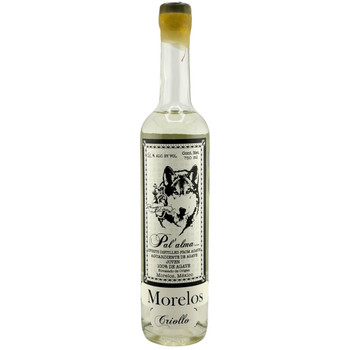
Pal' Alma Criollo Morelos Destilado de Agave 750ml
Pal'alma

Pal' Alma Iguana y Mole Destilado de Agave 750ml
Pal'alma

Pal' Alma Chepiche, Papalo y Cilentro Criollo Destilado de Agave 750ml
Pal'alma